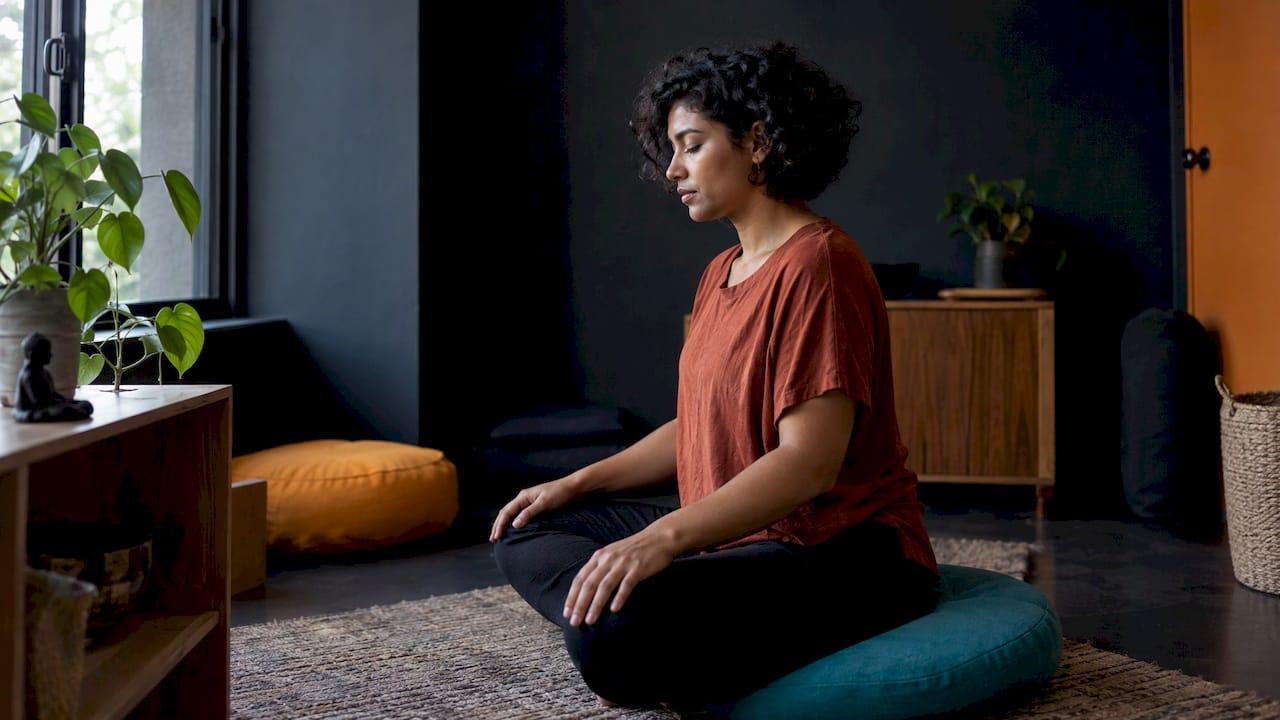
A mantra is a word, sound or short phrase you repeat to hold your attention in one place. The best-known examples are Sanskrit: Om, So Ham, the Gayatri Mantra, Om Namah Shivaya and Hari Om. Others are plain English phrases like "I am enough" or "Let go". This guide gives you both kinds, with meanings, a morning set, and a simple way to chant. At Tantric Guru we blend Vedic Hindu aartis and mantras with electronic dance music, so listening is one more way to meet these words, even before you know what they mean.
TL;DR
- Sacred mantras (Om, So Ham, Gayatri, Om Namah Shivaya, Hari Om) come from specific traditions. Personal mantras ("I am safe") are secular phrases. Both work as a point of focus.
- For mornings, pick one short mantra and repeat it for a few minutes. Om, So Ham and the Gayatri Mantra are the classic choices.
- Learn the meaning and the pronunciation first. Treating sacred words as generic relaxation audio is the main thing to avoid.
- Start small: three, nine or twenty-one repetitions, and stay with one mantra for some months before switching.
- Listening counts too. Our tracks pair aartis and mantras with electronic rhythm, so you can take in the sound before you chant.
Table of Contents
- What a mantra is, and why people use one
- Sacred mantra examples and their meanings
- What Hari Om means
- Morning mantras to start the day
- Personal mantra examples
- Do mantras work? Benefits people report
- How to choose a mantra
- How to chant: pronunciation and a simple routine
- Chanting respectfully
- Hearing mantras through music
- Putting it together: a one-week starter plan
- FAQ
- Sources
What a mantra is, and why people use one
The word comes from Sanskrit. In practice, a mantra is an anchor. You repeat it aloud, in a whisper or silently, and each time your mind wanders you come back to it. Simply Psychology's guide to mantra meditation says the essential skill is returning your attention to the chosen sound or phrase when the mind drifts. It also notes that mantras can be traditional (Om, So Hum) or secular (Peace, Here, Let go).
That gives you two families to choose from:
- Sacred mantras carry a tradition, a meaning and a way of being pronounced. Many come from Vedic, Hindu or Buddhist practice.
- Personal mantras are phrases you write yourself or borrow, such as "All is well". They work like affirmations.
Neither is wrong. The difference is context: a sacred mantra has a lineage behind it, and a respectful practice honors that.
Sacred mantra examples and their meanings
Om
Om is the most familiar sacred syllable. Swami Satchidananda, a yoga teacher writing in Integral Yoga Magazine, describes it as an aspect of cosmic sound vibration, and chanting as a way to tune your own system to similar vibrations. Om is short, easy to pronounce and a common first mantra.
So Ham (So Hum)
So Ham translates as "I am That". It is traditionally tied to the breath: "So" on the inhale and "Ham" on the exhale. It is a quiet, introspective mantra, and because it rides on breathing it suits people who find it hard to sit with silence.
Gayatri Mantra
The Gayatri Mantra is a revered Vedic hymn addressed to Savitur, the sun as source of light. People chant it for wisdom and inner clarity, traditionally in morning and evening meditation. It is longer than Om or So Ham, so it rewards slow learning of the Sanskrit and a good recording to follow.
Om Namah Shivaya
A five-syllable chant honoring Shiva, often translated as a bow to Shiva. It is one of the most widely chanted mantras in yoga classes and temples, and it is rhythmic enough to repeat for a long stretch.
Om Mani Padme Hum
This Buddhist mantra is linked to Avalokiteshvara and compassion. Two others from the same tradition: the Heart Sutra mantra, linked to wisdom, and Namu Amida Butsu, the Pure Land recitation of Amitabha's name.
Hari Om
See the section below. It deserves its own explanation because it is searched so often.
Mantras from the epics and devotional songs
If you come to mantras through the Ramayana, the Bhagavad Gita or the aarti tradition, you will meet names and verses sung as devotion: Rama's name, Krishna's name, the closing aarti sung at the end of worship. Treat each the same way you would any sacred phrase: find the meaning, learn the pronunciation, and notice which tradition it belongs to.
What Hari Om means
Hari Om is a pairing of two mantras. Satchidananda describes Hari and Om as aspects of cosmic sound vibration, repeated so that you tune to similar vibrations. In the usual explanation, Hari means "the remover" and is associated with Vishnu, while Om is the vibration of the universe, as one yoga reference puts it. Put together: a call to the one who removes obstacles, joined to the primal sound.
You will also hear "Hari Om" used as a greeting or sign-off in some yoga communities. As a mantra, you simply repeat it slowly, with a clear long "o" in each word.

Morning mantras to start the day
Mornings are the time most mantra traditions prefer, because the mind is quiet and the day has not yet claimed you. The Gayatri Mantra is traditionally practiced in morning and evening meditation. Here is a small morning set, from shortest to longest:
| Mantra | Type | Use it for | Time needed |
|---|---|---|---|
| Om | Sacred | A simple, grounded start | 1 to 3 minutes |
| So Ham | Sacred | Pairing with slow breathing | 3 to 5 minutes |
| Hari Om | Sacred | A rhythmic, two-word chant | 3 to 5 minutes |
| Gayatri Mantra | Sacred | Clarity and focus for the day | 5 to 10 minutes |
| "I am safe" | Personal | Easing morning anxiety | 1 to 2 minutes |
| "All is well" | Personal | A calm, steady tone | 1 to 2 minutes |
| "Let go" | Personal | Dropping what you cannot control | 1 minute |
A simple routine: sit comfortably, take three slow breaths, then repeat your chosen mantra at an even pace. When you finish, sit in silence for a moment and notice whether your attention has gathered. Closing with a short moment of gratitude is a common way to end.
Personal mantra examples
Simply Psychology lists affirmations such as "I am safe," "I am enough" and "All is well" as mantra choices. They differ from sacred chants in one important way: they carry no lineage, so you can shape them to your day. Some themes people use:
- Calm: "I let go of what I cannot control." "Peace."
- Confidence: "I am enough as I am." "I can do this."
- Focus: "Here." "One thing at a time."
- Resilience: "This will pass." "I keep going."
Keep them short, in the present tense and in words you actually believe. A phrase that feels false pulls attention into an argument instead of resting it.
Do mantras work? Benefits people report
People who chant most often report a steadier mind, a greater sense of calm and less stress. Healthline's overview of mantra meditation lists self-awareness, reduced stress, calm and self-compassion among the commonly reported benefits, and notes that repeating a mantra occupies awareness so it drifts less.
There is also early research. In a 12-week trial among medical students, Gayatri Mantra chanting improved autonomic measures and lowered anxiety and depression scores compared with a control group. It is one study in one group of people, so read it as encouraging rather than a promise.
A helpful way to think about it comes from Buddhist teaching: the power of a mantra is often described as its ability to focus the mind and cultivate specific qualities, more than its literal translation. That is why you can feel settled even if you do not yet understand every word.
One safety note: a mantra is not a guaranteed shortcut to wealth, health or a specific result. In particular, a chant such as the Mahamrityunjaya Mantra should not replace medical care. If you have a health condition, a doctor is the person to see about treatment, and chanting can sit alongside that.
How to choose a mantra
Start with the question: what do you want from it?
- Decide the path. In many Tantric traditions a mantra is typically received from a teacher at initiation (diksha), while self-chosen devotional practice is common outside initiatory lineages. If your family or community already gave you a practice, begin there.
- Ask what it points toward. Which quality, deity or state does it name, and what does it mean in its tradition? One practitioner's guide suggests also asking whether you know its pronunciation and method.
- Pick what resonates. Tricycle's guidance is to choose a mantra that resonates with you, practice ten to twenty minutes a day and stay with it for some months before thinking of a switch.
- Keep it single. One mantra, repeated for weeks, goes deeper than a different one each morning.
How to chant: pronunciation and a simple routine
Sanskrit vowels are long or short, and the difference matters. The advice from a beginner's guide is to read the Sanskrit and transliteration, repeat the mantra slowly with distinct words and listen to a trusted teacher or established recording rather than guessing.
Then:
- Sit comfortably and settle your attention.
- Say the mantra slowly, keeping its meaning in mind.
- Begin with three, nine or twenty-one repetitions. A 108-bead mala is traditional, but not required.
- When your mind wanders, come back without scolding yourself.
- Finish in a short silence, and if it suits you, with gratitude.
The common mistake is speed. Rushing blurs the syllables and turns the chant into noise. Slow it down until each word is clear.
Chanting respectfully
Mantras belong to living traditions. Respectful practice means learning a mantra's linguistic and religious context rather than treating sacred words as generic relaxation audio. In a group or public setting, name the tradition the mantra comes from, invite people to join without pressure, and let anyone simply listen. Sacred phrases are not interchangeable, and one tradition's chant should not be presented as another's.

Hearing mantras through music
Not everyone starts by chanting. Many people begin by listening: a repeated phrase over a steady beat, a familiar aarti in a new setting. Tantric Guru makes original tracks that fuse ancient Vedic Hindu aartis and mantras with modern electronic dance music. The idea is that you can reach a meditative state and feel joy and calm even when you do not understand the lyrics or their meanings.

The tracks are available for streaming and download on Spotify, Apple Music, YouTube Music, Amazon Music, Tidal and iHeartRadio. If you are curious how a mantra feels carried by electronic rhythm, listen to Tantric Guru and then use this guide to learn the words you hear.
Putting it together: a one-week starter plan
- Day 1 to 2: Choose Om or So Ham. Three minutes after waking.
- Day 3 to 4: Add the meaning. Say it aloud once with the translation in mind.
- Day 5 to 6: Extend to nine or twenty-one repetitions, slowly.
- Day 7: Sit in silence for a minute afterward and note how your attention feels.
Then keep going for some months with the same mantra, as the guidance above suggests, before you decide whether it suits you.
FAQ
How do you find your mantra?
Start with what resonates and what you can pronounce and understand. If a family, teacher or community has already given you a practice, begin there. Otherwise choose a short one, such as Om or So Ham, and stay with it for some months.
What does Hari Om mean?
Hari is associated with Vishnu and is read as "the remover", and Om is the vibration of the universe. Together they form a two-word chant. Satchidananda describes both as aspects of cosmic sound that you repeat to tune your own system to similar vibrations.
What is a good morning mantra?
Om, So Ham and the Gayatri Mantra are classic morning choices, and the Gayatri is traditionally chanted in both morning and evening practice. For a personal phrase, "All is well" or "I am safe" works in a minute or two.
Do you need to understand a mantra for it to help?
Understanding deepens the practice, and learning the meaning is part of chanting respectfully. Many people also find that the sound alone brings focus and calm while they learn. Start with the meaning of a short mantra and build from there.
How long should I chant each day?
Guidance from Tricycle suggests ten to twenty minutes a day. If that is too much at first, begin with three, nine or twenty-one repetitions and lengthen the session as it becomes comfortable.
Sources
- Mantra Meditation: A Practical Guide to Using Sacred Sound (Simply Psychology)
- How Mantras Work (Integral Yoga Magazine)
- Swara Meditation (Swara Yoga)
- The Gayatri Mantra (Yoga International)
- Famous Buddhist Mantras and Their Meanings
- 6 of the Most Common Yoga Mantras (Yogapedia)
- Mantra Meditation: Benefits, How to Try It (Healthline)
- Gayatri Mantra trial, IJDDT
- Hindu Mantras for Beginners (VedicVani)
- Choosing a Mantra: Initiation, Self-Selection (The Kriya Yogi)
- How to Begin Mantra Japa with a Mala (Dharma Renaissance)
- Mantra Practice: How to Choose a Mantra (Tricycle)
- How to Begin Sanskrit Mantra Meditation Respectfully (Bridge Magazine)