A mantra relaxes you when you give it your attention and gently return to it each time your mind wanders. You can choose a short Sanskrit word like Om or So Hum, or you can let a track carry the chant for you. Our own Tantric Guru tracks blend Vedic aartis and mantras with electronic rhythm, so you can take in sacred sound without needing to understand the lyrics.
TL;DR
- A mantra is a word, phrase or sound repeated as a point of focus. Sanskrit mantras such as Om, So Hum and Om Shanti are the most common choices for calm.
- Research reviews report calming effects from mantra practice, and what matters most is how you use it: return to it gently when your mind drifts.
- Five minutes once or twice a day is enough to begin. You can chant aloud, whisper, or repeat it silently with your breath.
- Listening counts too. Chant-based music with slow, steady melody is rated as more relaxing than ordinary songs or speech.
- Tantric Guru offers original tracks that fuse Vedic aartis and mantras with EDM, on all major streaming platforms.
Table of Contents
- What a mantra is and why it calms
- Mantras to calm the mind, and what they mean
- How to practice a mantra for relaxation
- What the research says about chanting and listening
- Relaxing mantra music and Sanskrit music
- Where Tantric Guru fits
- FAQ
- Sources
What a mantra is and why it calms
The word comes from Sanskrit and means an instrument of mind or thought. In meditation, a mantra is the object you rest your attention on. It can be a single seed syllable such as Om, or a longer phrase.
Researcher Doug Oman, writing in a 2024 guidance article, describes a mantra as a phrase or sound repeated and sanctified over time within a spiritual tradition. That history is part of why mantras can feel different from a random word.
The calming mechanism is simple. A University of Wisconsin handout explains that, in Dr. Herbert Benson's work, repeatedly returning attention to the mantra brings on the relaxation response: slower heart rate, lower blood pressure and slower breathing. Over time, the review above notes, repetition becomes almost automatic and the mind settles into a quiet state with less worry.
A 2025 review of Om meditation covered 20 studies, 17 quasi-experimental and 3 randomized controlled trials, and found an overall tendency toward balancing and calming effects. Mayo Clinic describes mantra meditation as repeating a calming word, thought or phrase to keep out unwanted thoughts. If you live with a mental health condition, talk with your doctor or therapist before starting a meditation routine, since Mayo notes meditation can worsen symptoms for some people.
Mantras to calm the mind, and what they mean
You do not need a long list. Pick one that feels natural to say. These are widely used for calm, with meanings from Healthline and the University of Wisconsin handout.
| Mantra | Meaning | Good for |
|---|---|---|
| Om | The primordial sound of creation | A simple start; feel the vibration in chest and head |
| So Hum | "I am That," matched to the breath | Breath-paced sessions; Healthline suggests 3 to 21 repetitions |
| Om Shanti | Shanti means peace | Settling a restless evening |
| Om Mani Padme Hum | A Buddhist compassion chant, often translated "jewel in the lotus" | Gentle, slow repetition; 3 to 11 rounds suggested |
| Maha Mrityunjaya | A Shiva mantra | When the mind feels overwhelmed |
| Gayatri Mantra | A hymn to the sun, seeking wisdom | Morning practice |
| Asatoma Sadgamaya | A verse about release and surrender | Letting go at day's end |
Three repetitions of "shanti" at the end of a peace prayer traditionally refer to peace of mind, speech and body, according to YogaPedia. The Pancha Shanti prayers of the Upanishads are recited at the start and end of rituals and close with om and three utterances of shanti.
For more options, including personal and non-Sanskrit ones, see our list of mantra examples. If a longer text appeals to you, the Nirvana Shatakam is a good place to learn the meaning and chanting.
Does the choice of word matter?
Less than you might think. As presented in the Wisconsin handout, Dr. Benson stresses that what counts is how you use the word, gently coming back when the mind wanders, not which word you pick. Choose a mantra whose sound you enjoy, then stay with it for a few weeks.
How to practice a mantra for relaxation
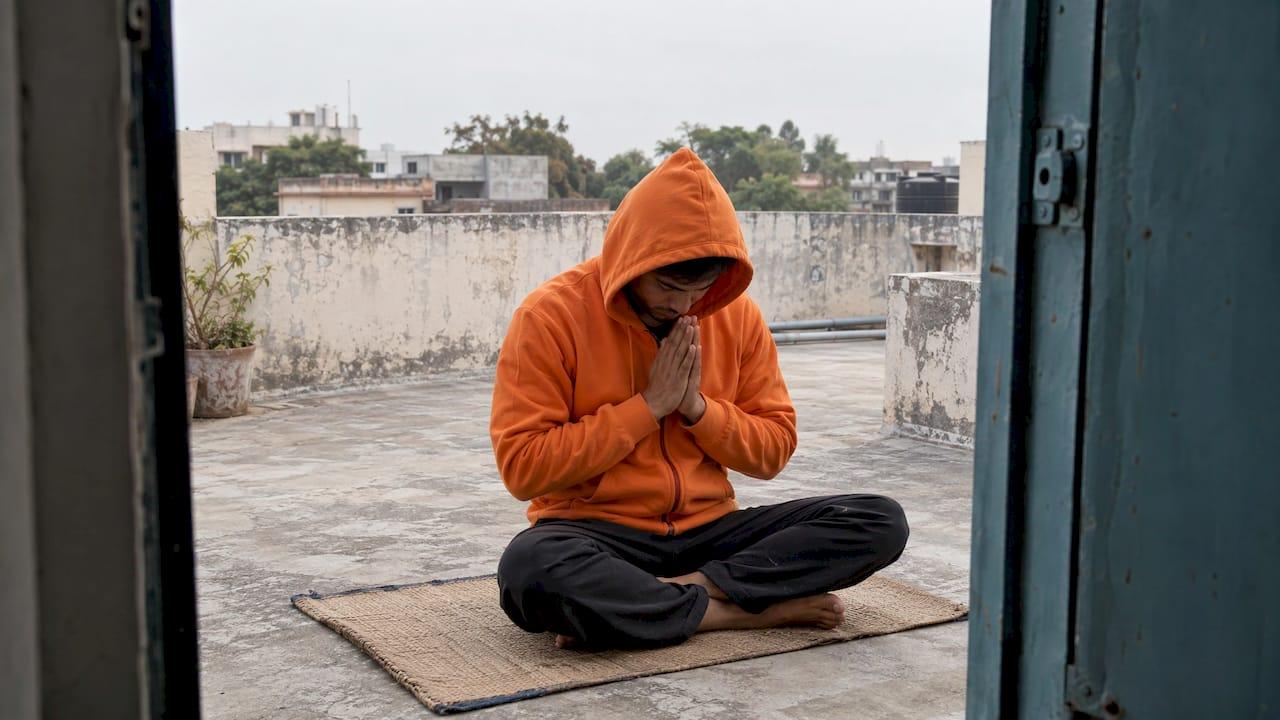
- Sit comfortably somewhere quiet. Close your eyes and let your muscles soften.
- Choose your mantra. One word or short phrase is plenty.
- Pair it with your breath. The University of Nebraska Medical Center suggests silently saying it on each exhale. With So Hum, "so" goes with the inhale and "hum" with the exhale. Let the breath keep its natural pace rather than forcing it, as Yoga International advises.
- Pick your voice. You can say it aloud, whisper it or think it. The Wisconsin handout says all three work.
- Keep a passive attitude. When thoughts arrive, ignore them and return to the mantra. This return is the practice.
- Set the length. Start with five minutes once or twice a day. Nebraska describes 10 to 20 minutes once or twice daily, and not within two hours after a meal.
Some traditions prescribe 108 repetitions, a number noted in a 2025 review. A bead string helps you count, but a timer works as well.
Where it goes wrong
Most people stop because they think a wandering mind means failure. It does not. Noticing the drift and coming back is the exercise. Others push the breath to fit the words, which creates tension instead of calm. Slow down, shorten the mantra, and let the breath lead.
What the research says about chanting and listening
The benefits are not limited to those who chant themselves. A 2025 study of 242 chants from seven traditions found they share relatively flat, slow-changing melody and steady voicing in a comfortable, low pitch range. In three listening experiments with 61, 114 and 80 people, original chants earned higher relaxation ratings than songs and speech.
In a randomized trial of 60 people with Stage 1 hypertension, listening to 528 Hz OM chanting for 15 minutes daily for one month was followed by lower pulse and blood pressure, with no adverse events reported. Anyone managing blood pressure should keep following their doctor's guidance.
Phrase length may matter as well. A music-therapy review found that musical or spoken phrases of about ten seconds, which match natural blood-pressure rhythms, brought stronger vagal slowing and feelings of calm.
In a small trial of older adults with knee osteoarthritis, both mantra meditation and music listening improved mood, stress and quality of life over eight weeks, and the mantra group showed greater gains in overall mood and sleep. Using both, chanting and listening, is a reasonable way to build a habit.

Relaxing mantra music and Sanskrit music
If silence feels hard, sound can hold your attention for you. Sanskrit chanting and kirtan, in which a leader sings and the group answers, are described as repetitive, rhythmic and warm. The Art of Living guide says Sanskrit satsang singing creates an atmosphere that helps transcend thoughts and experience calm.
Professor Bill Thompson of Macquarie University notes that chanting combines music therapy with meditation and mindfulness, and that group chanting offers deeper connection than silent chanting. He also stresses that it works best when people enjoy it.
That last point is why the format matters. Some people want a slow, droning chant. Others, especially EDM fans, find steady electronic pulses easier to follow than silence. Listen respectfully: know where a recording comes from and treat the words as sacred, not as novelty.
Matching music to the moment
- Winding down at night: slow, low, unhurried chant with minimal rhythm.
- Morning focus: a brighter track with a gentle beat. Our guide to morning meditation music covers lengths and picks.
- Lifting your mood: see positive energy music.
- Deep listening sessions: our overview of energy healing music explains how to listen.
Where Tantric Guru fits
Tantric Guru makes original tracks that blend ancient Vedic Hindu aartis and mantras with modern electronic dance music. They are designed so you can enter a meditative state, with joy and tranquility, whether or not you understand the lyrics or meanings. That suits readers who love bhajans, Ramayana or Bhagavad Gita themes, Krishna devotion or dance music, and want a contemporary way to take them in.
The tracks are available to stream and download on Spotify, Apple Music, YouTube Music, Amazon Music, Tidal and iHeartRadio. Start at Tantric Guru and pick a track to pair with your five minutes of breath and mantra.

Play a track while you repeat Om or So Hum silently with your exhale. Let the sacred words in the music carry you and treat the beat as your anchor.
FAQ
Which mantra is best for calming the mind?
There is no single best one. Om, So Hum and Om Shanti are common starting points because they are short and easy to pair with breath. Choose the one that feels comfortable to say and use it consistently for a few weeks.
How long should I chant a mantra?
Five minutes once or twice a day is enough to start, according to the Wisconsin handout. University of Nebraska guidance describes 10 to 20 minutes once or twice daily. Increase the time slowly as the habit settles in.
Do I need to understand Sanskrit for it to work?
No. Yoga International notes that so'ham needs no initiation and can be practiced by anyone. Learning the meaning can deepen the experience, but the steady repetition is what brings the calm.
Is listening to mantra music as good as chanting?
Both can help. Listening experiments found chants rated as more relaxing than songs or speech, and a small trial found music listening and mantra meditation both improved mood and stress. Many people combine them, listening first and then repeating the mantra silently.
Sources
- Scientific Evidence of Health Benefits by Practicing Mantra Meditation
- What is a mantra? Guidance for practitioners and researchers
- Mantram Meditation handout, University of Wisconsin Osher
- Tradition, Science and Practice of Om Dhyana
- Meditation: A simple, fast way to reduce stress, Mayo Clinic
- Mantras for Anxiety, Healthline
- 6 of the Most Common Yoga Mantras, YogaPedia
- Shanti Mantras
- Relaxation Technique, University of Nebraska Medical Center
- A Mantra Meditation for Everyone, Yoga International
- The Transformative Power of AUM, Traditional Medicine
- Chants across seven traditions share acoustic traits
- Effect of OM Chanting of 528Hz Frequency on Heart Rate
- Cardiovascular effects of music by entraining
- Mantra Meditation versus Music Listening on Knee Osteoarthritis
- Relaxing Chant Music: A Gentle Guide
- Meditation with Music: A Guide to Reduced Stress
- Chanting is an ancient practice with mental health effects, ABC News